SINGLE-END THREADED STUDS.
Explore the product form and the information needed for an accurate single-end threaded studs inquiry.
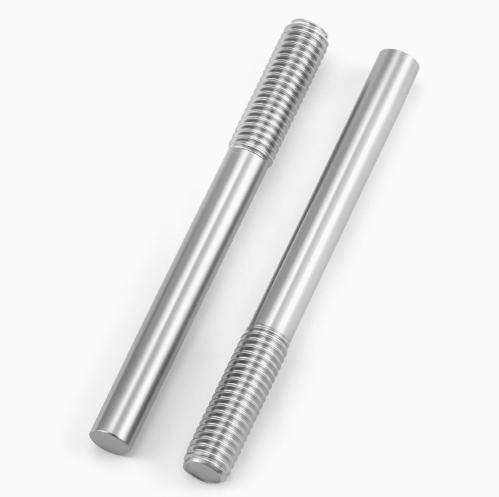 01 / 01 · PRODUCT PHOTO
Photos illustrate the product form. Confirm the exact dimensions and order specification in your inquiry.
Single-End Threaded Studs
A smooth shank with one threaded end. The notes below identify the dimensions and fit details to include with your inquiry.
- Product form
- Single-End Threaded Studs
- Visible construction
- A smooth shank with one threaded end
- Dimensions to specify
- Shank diameter and length, threaded length and pitch
- Fit / application
- Confirm how the smooth end is mounted or connected
- Material & finish
- State your required material, grade and surface treatment in the inquiry.
- Standard / documentation
- Specify thread standard, material grade and any straightness requirement.
- Quantity & packing
- State the order quantity, preferred packing and destination.
THE DETAILS THAT MATTER.
For a useful quote, specify the diameter, pitch, overall and threaded length, material or grade, finish, quantity and packing. A drawing is helpful for nonstandard end details.
What to send with an RFQ
- Product name or a reference photo
- Diameter, thread pitch and length
- Material, grade and finish
- Quantity, packing and destination
These are request fields, not claims that every combination is in stock.
ONE THREADED END.
EVERY DIMENSION CLEAR.
Overall length, threaded length, plain-section dimensions and inspection requirements for your drawing.
A single-end threaded stud has a threaded portion at one end and an unthreaded portion whose dimensions are defined by the drawing. Overall length alone does not describe the part. For an LD Screw quotation, identify the thread, threaded length, plain-section dimensions, material, finish and quantity, together with any shoulders or end features required by the assembly.
Define the threaded end and plain section separately
A fully threaded rod is threaded along its length. A single-end stud uses a different combination of threaded and unthreaded features. If your component has threads at both ends, identify that explicitly on the drawing instead of relying on the product name. Compare the fully threaded rod guide when selecting the required form.
| Drawing or RFQ field | What to specify | What it clarifies |
|---|---|---|
| Overall length | Finished end-to-end length and tolerance; state the units. | The full component length, independently of the threaded portion. |
| Threaded end | Complete metric or inch thread designation, fit and threaded length. | The mating thread and length required for the connection. |
| Usable thread and transition | Required usable thread length and any runout, relief or shoulder detail shown on the drawing. | The transition must suit the actual mating component. |
| Unthreaded section | Plain-shank diameter, length, diameter tolerance and any shoulder dimensions. | The unthreaded section can have requirements separate from the thread diameter. |
| Other features | Chamfers, radii, flats, grooves, end details and any specified surface-finish or geometric controls. | A product photo does not define these machined features. |
| Material and finish | Material designation, grade, heat-treatment condition if specified and surface treatment. | The quotation needs the required material and finished condition. |
| Inspection and delivery | Drawing revision, critical dimensions, required records, quantity, packing and destination. | Manufacturing review, inspection and supply refer to the same requirement. |
Use one current drawing revision
Send the drawing revision that applies to the purchase and identify any critical dimensions. If the part locates in a hole, passes through a bracket or seats against a shoulder, show the relevant fit and reference surfaces. A photograph or approximate overall measurement is useful for identification, but it is not a complete machining specification.
Where a drawing uses geometric dimensioning and tolerancing, retain its stated interpretation standard. ASME Y14.5 addresses dimensioning and tolerancing conventions; the public description is a reference to the subject, not a claim that every part requires that standard. For metric thread terminology, see the official scope of ISO 261.
Material, finish and mating parts
Identify the material and mechanical requirements from the design, then state the finish and any dimensions or thread-fit requirements that apply after finishing. Our materials and grades guide and surface finishes guide explain the information to include.
If the threaded end works with a nut, include the nut specification and quantity. See our hex nuts; the thread system, size, pitch or thread count, fit and mechanical requirements must be reviewed together.
Common single-end stud questions
Are overall length and threaded length the same measurement?
No. Give the overall component length and the threaded length as separate requirements. Identify any required usable thread length and transition details on the drawing.
Must the plain shank have the same diameter as the thread?
Follow the drawing. The plain section, shoulder and threaded end may have different dimensions or tolerances. State each relevant feature rather than calculating the plain diameter from the thread name.
Can a US drawing use inch dimensions and inch threads?
State the units and full thread designation shown on the drawing, including thread count, series and fit. If dimensions use mixed units, label them explicitly. Do not substitute a metric thread based only on a close diameter conversion.
Can you quote from an existing sample?
Send clear photos and all known dimensions or an inspection drawing. Identify the material and finish if known, and mark the items needing confirmation. We review the information required before confirming a specification and quotation.
What inspection information should I provide?
Identify the dimensions and thread requirements that need acceptance checks, their tolerances and any required reporting or sampling plan. Agree the requirements before production; no unlisted inspection result or machining tolerance is promised by the photograph.
Send a drawing-based inquiry
Send the current drawing, units, overall and threaded lengths, plain-section and shoulder dimensions, tolerances, material, finish, quantity, destination and required records. See our workshop, then send your single-end stud drawing so the part can be reviewed against the actual assembly requirement.
READY TO DISCUSS?
For a precise quotation, include the product name, dimensions, material, grade, finish, quantity and destination. We review the actual specification before quoting.