HEX NUTS.
Explore the product form and the information needed for an accurate hex nuts inquiry.
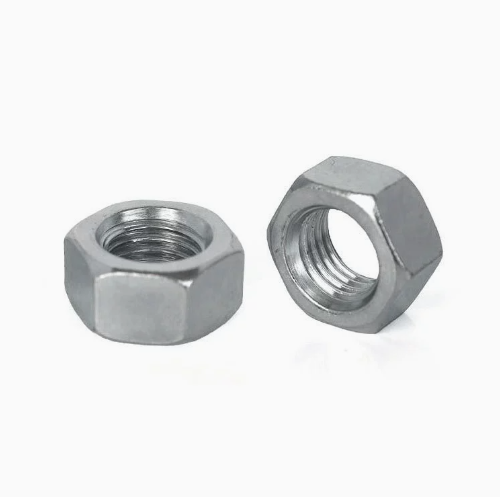 01 / 01 · PRODUCT PHOTO
Photos illustrate the product form. Confirm the exact dimensions and order specification in your inquiry.
Hex Nuts
Six-sided nuts with an internal thread. The notes below identify the dimensions and fit details to include with your inquiry.
- Product form
- Hex Nuts
- Visible construction
- Six-sided nuts with an internal thread
- Dimensions to specify
- Thread diameter and pitch, across-flats size and height
- Fit / application
- Confirm mating bolt grade and assembly requirement
- Material & finish
- State your required material, grade and surface treatment in the inquiry.
- Standard / documentation
- Provide thread standard, property class and mating fastener details.
- Quantity & packing
- State the order quantity, preferred packing and destination.
THE DETAILS THAT MATTER.
Confirm the matching thread or hole diameter, pitch, outer dimensions, material, grade, finish and quantity. Pairing hardware or an assembly drawing helps avoid mismatch.
What to send with an RFQ
- Product name or a reference photo
- Diameter, thread pitch and length
- Material, grade and finish
- Quantity, packing and destination
These are request fields, not claims that every combination is in stock.
MATCH THE THREAD.
DEFINE THE JOINT.
Thread systems, nut profiles and order details for a clear hex nut quotation.
Hex nuts are internally threaded fasteners with six external flats for tightening with a wrench or socket. A plain hex nut mates with a bolt, screw or threaded rod to form a fastening assembly. For a useful quotation from LD Screw in Yongnian, Handan, specify the complete thread, nut profile, material or property class, finish and quantity together. The matching part and the joint requirements determine the selection.
Specify the nut and its mating thread
Start with the designation on the drawing, rather than the nut size measured across its outer flats. The table below is an inquiry checklist; the example thread designations illustrate notation and do not describe a stock range.
| RFQ field | What to provide | What it clarifies |
|---|---|---|
| Thread system and size | Metric diameter and pitch, such as M10 × 1.5; or an inch designation, such as 3/8-16 UNC. | Which mating thread is required. |
| Thread tolerance or class | Copy the specified tolerance or thread class from the drawing. | The required fit and inspection basis. |
| Nut profile and dimensions | Standard and edition, nut height, width across flats and any clearance limits. | Regular, thin and other profiles are not selected by thread diameter alone. |
| Material and strength | Material designation and nut property class or applicable grade. Include the mating fastener specification. | The nut and bolt or rod must suit the designed assembly. |
| Finish and mating condition | Required coating, finish specification and the finish on the mating thread. | Coating and thread-fit requirements need to be considered together. |
| Quantity, packing and records | Piece count, bag/carton or pallet requirements, destination and requested documents. | A clear quotation and order-specific inspection plan. |
Match the thread system, profile and grade
Metric threads specify pitch in millimetres; inch threads use threads per inch and a thread series. An approximate diameter conversion does not establish compatibility. Include the mating bolt or threaded rod specification when ordering a matched assembly.
A dimensional standard identifies the nut form and relevant dimensions. The required material and strength also need to be stated. For carbon-steel nuts, give the specified property class or grade; for stainless steel, identify the material and required mechanical specification. The materials and grades guide explains the terms to include.
For example, ISO 4032 covers hexagon regular nuts, style 1. If the drawing names DIN 934 or another standard, retain that designation and edition for review. Our DIN 934 and ISO 4032 guide explains why dimensions should be checked before a substitution.
Plain hex nut, flange nut or nylon insert lock nut?
| Nut form | Distinguishing feature | What to confirm |
|---|---|---|
| Plain hex nut | Internally threaded hexagonal body without a nylon locking insert. | Thread, profile, grade, bearing arrangement and any separate locking requirement. |
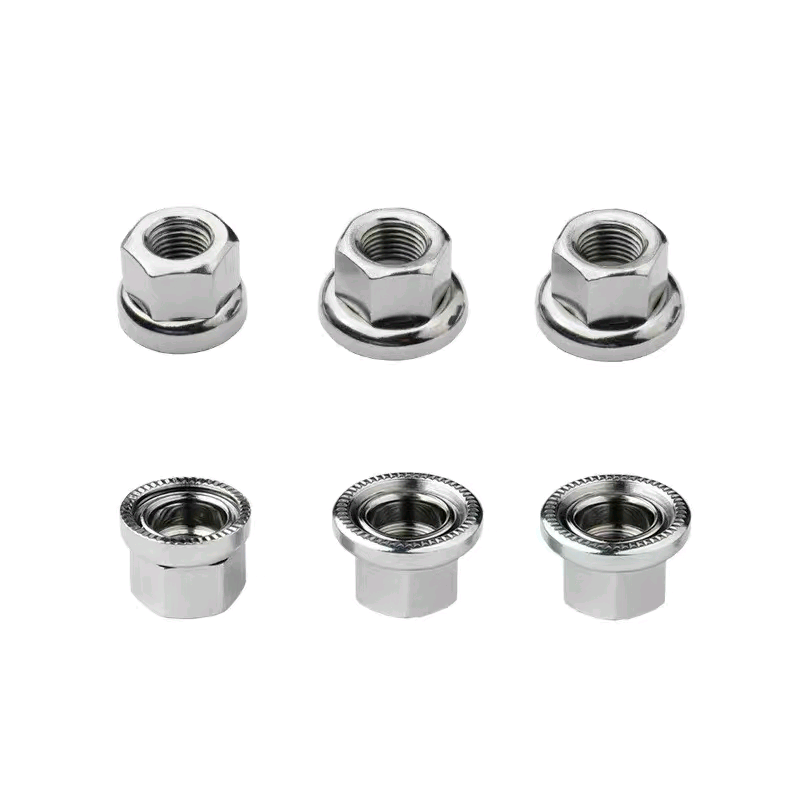
| Hex flange nut | An integral flange forms the bearing surface. | Flange dimensions, mating surface and whether a locking feature is actually specified. |
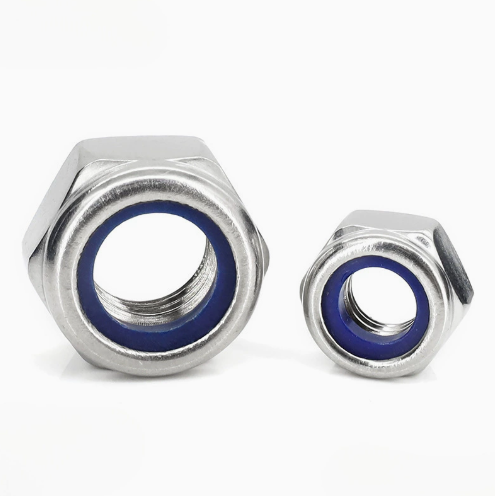
| Nylon insert lock nut | A non-metallic insert adds prevailing resistance as it engages the mating thread. | Insert suitability, service conditions and the required locking-performance criteria. |
Compare our hex flange nuts and nylon insert lock nuts when reviewing the assembly. Their similar hexagonal shape does not make their functions interchangeable.
Common hex nut buying questions
Can I order nuts to match a threaded rod?
Include the rod thread system, diameter, pitch or thread count, tolerance and material or grade requirement. State how many nuts are needed per rod and whether washers are part of the order. We review the components together before confirming the quotation.
Is an M10 nut identified by a 10 mm wrench size?
No. M10 identifies the nominal metric thread diameter. The width across flats is a separate external dimension determined by the specified nut profile and standard. Include both when wrench access or assembly clearance matters.
Are DIN 934 and ISO 4032 automatically interchangeable?
Check the specified size, nut height, width across flats, material and edition against the drawing. Do not approve a substitution from the standard names alone. Send the original requirement with your RFQ so any proposed alternative can be reviewed.
Can the same nut be used with plain, plated and galvanized threads?
Confirm the coating system and mating-thread requirements for the complete assembly. A nut selected for one thread and coating combination should not be assumed suitable for another. Include the finish specification; our surface finishes guide lists the information to identify.
Does the product photo establish the material or strength grade?
No. A photograph shows the product form. Use the drawing, marking requirements, agreed specification and any requested inspection records to identify material and mechanical properties.
Which tightening torque should I use?
The product name and nominal diameter do not establish an installation torque. Use the approved assembly procedure for the specified bolt and nut grades, finish, lubrication and joint. Send the engineering requirement if installation or torque testing is part of the purchase specification.
Send a complete hex nut RFQ
Send the drawing or standard and edition; thread designation and fit; nut height and width across flats if relevant; material and grade; finish; quantity; matching bolt, rod or washer details; packing; destination; and required records. State any sample or inspection requirement before the order is agreed.
See our workshop, then send your hex nut specification to LD Screw. The quotation confirms the product specification, documents, packing and delivery terms for the actual order.
READY TO DISCUSS?
For a precise quotation, include the product name, dimensions, material, grade, finish, quantity and destination. We review the actual specification before quoting.